
In today’s fast-paced digital landscape, marketing automation strategies have evolved from a luxury to an absolute necessity. The ability to deliver personalized, timely messages at scale while freeing up your team to focus on strategic initiatives represents a competitive advantage that no modern business can afford to ignore. This comprehensive guide explores proven strategies that can transform your marketing efforts and drive measurable business results.

Understanding the Power of Marketing Automation
Marketing automation refers to the technology and strategic frameworks that allow businesses to automate repetitive marketing tasks, personalize customer experiences, and measure campaign effectiveness across multiple channels. Far from being a simple email scheduler, modern marketing automation platforms serve as the central nervous system of your digital marketing operations, connecting data, workflows, and customer touchpoints into a cohesive ecosystem.
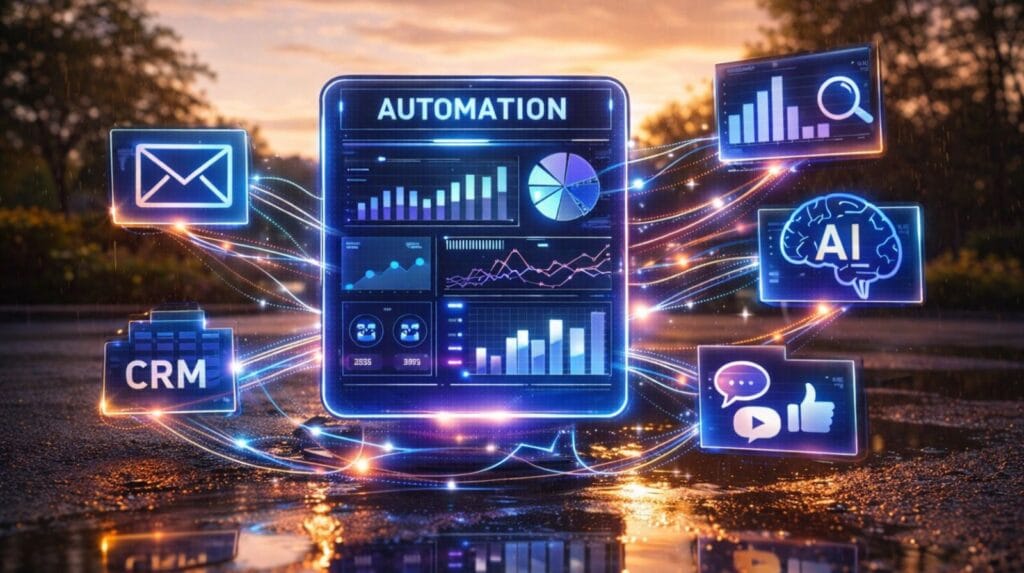
The statistics speak volumes: companies that excel at lead nurturing through automation generate 50% more sales-ready leads at 33% lower cost. Moreover, businesses using marketing automation see a 451% increase in qualified leads. These numbers underscore a fundamental truth—automation isn’t about replacing human creativity but amplifying it, allowing marketers to focus on strategy while technology handles execution at scale.
Email Marketing Automation: The Foundation of Success
Email remains one of the highest-ROI marketing channels, and automation multiplies its effectiveness exponentially. The key lies in moving beyond batch-and-blast campaigns to sophisticated, behavior-driven communication strategies.
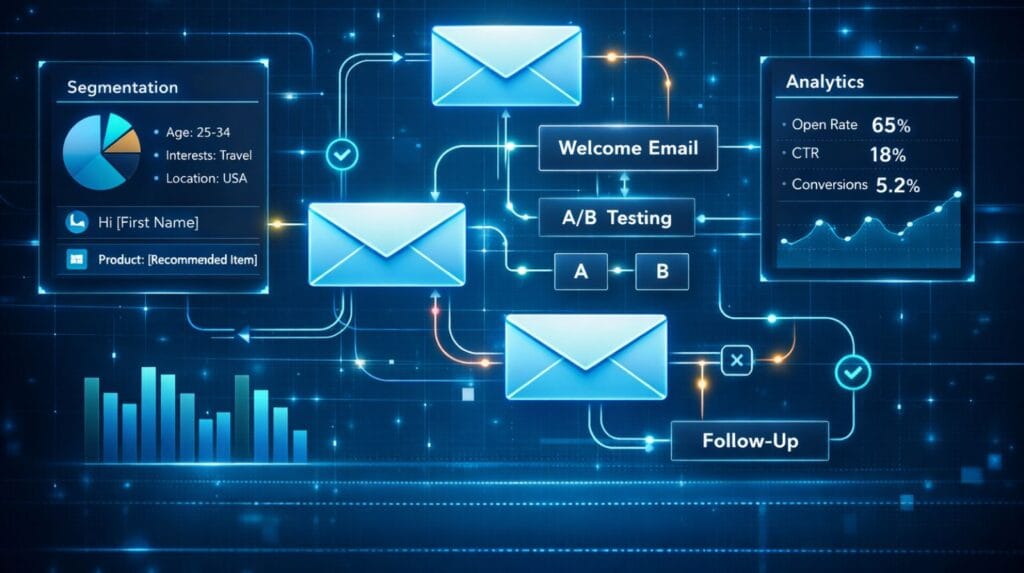
Segmentation and Personalization form the bedrock of email automation success. Rather than treating your entire database as a monolithic entity, divide contacts based on demographics, behavior, engagement level, purchase history, and preferences. Dynamic content blocks allow you to customize email components for different segments within a single campaign, dramatically improving relevance and engagement rates.
Drip Campaigns and Nurture Sequences guide prospects through the buyer’s journey with carefully timed, educational content. A well-designed nurture sequence might start with awareness-stage content, gradually introducing solution-focused messaging, and ultimately presenting product-specific information when the lead demonstrates sufficient engagement. The automation ensures consistent follow-up without requiring manual intervention, significantly improving conversion rates while reducing sales cycle length.
Behavioral Trigger Emails represent automation at its most powerful. These messages fire automatically based on specific actions or inactions, such as abandoned cart reminders, welcome series for new subscribers, post-purchase follow-ups, or re-engagement campaigns for dormant contacts. Because they respond to real-time behavior, trigger emails consistently achieve open rates 2-3 times higher than standard promotional emails.
Lead Scoring and Nurturing: Identifying Your Best Opportunities
Not all leads are created equal, and treating them identically wastes resources and opportunities. Lead scoring automation assigns numerical values to prospects based on their characteristics and behaviors, allowing your team to prioritize efforts effectively.
An effective lead scoring model incorporates both explicit data (job title, company size, industry) and implicit data (website visits, content downloads, email engagement). For example, a C-level executive at a target company who downloads a product comparison guide and visits your pricing page three times should score significantly higher than a student conducting research who opened one email.

Progressive profiling strategies enhance your lead intelligence over time. Rather than overwhelming prospects with lengthy forms, automation allows you to gather information incrementally across multiple interactions. The first touchpoint might capture name and email, the second adds company and role, and subsequent engagements fill in additional details—creating a comprehensive profile without friction.
Social Media Automation: Maintaining Consistent Presence
Social media’s always-on nature makes automation particularly valuable, though it requires careful balance to maintain authenticity. Scheduling tools ensure consistent content distribution across time zones and platforms, maintaining visibility even when your team is offline. However, the most sophisticated social automation goes far beyond simple scheduling.
Social listening automation monitors brand mentions, competitor activity, and industry trends, alerting your team to engagement opportunities and potential crises in real-time. Chatbots handle routine customer inquiries on platforms like Facebook Messenger and Instagram, providing instant responses while routing complex issues to human representatives.
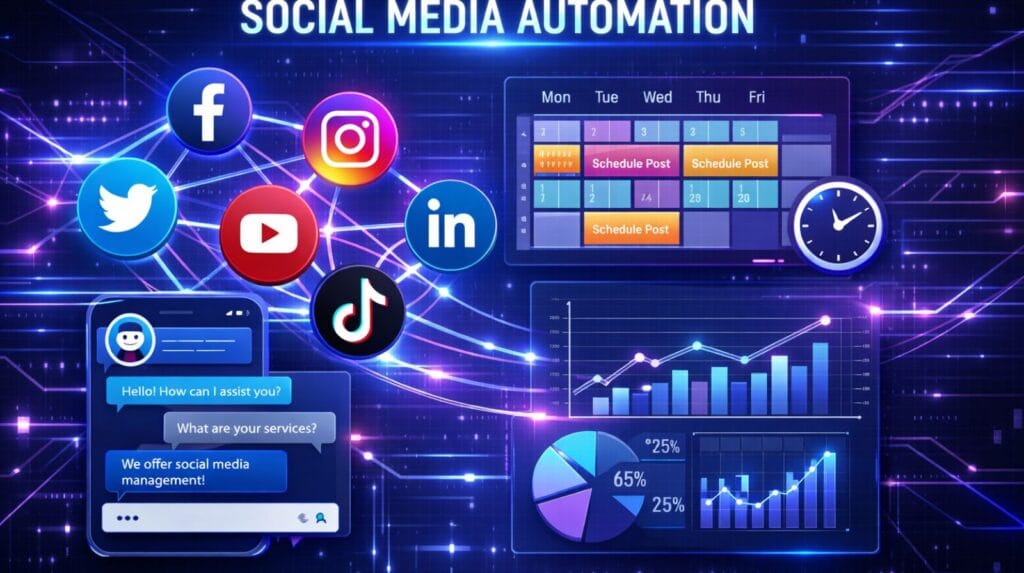
Integration between social platforms and your CRM creates powerful insights into how social interactions influence the broader customer journey. When a prospect engages with your LinkedIn content, downloads a whitepaper from a Twitter link, and then requests a demo, automation ensures this multi-channel activity informs your overall lead scoring and nurturing strategy.
Content Marketing Automation: Delivering the Right Message at the Right Time
Content remains king, but automation ensures it reaches the right audience at optimal moments. Dynamic content personalization adapts website copy, calls-to-action, and resource recommendations based on visitor characteristics and behavior. A returning enterprise-level prospect sees different messaging than a first-time visitor from a small business, creating more relevant experiences that drive conversion.
Automated content distribution amplifies your reach by coordinating multi-channel promotion. When you publish a new blog post, automation can schedule related social media posts, trigger email notifications to interested segments, update your website’s “latest insights” section, and even generate internal alerts for sales teams who might leverage the content in their outreach.
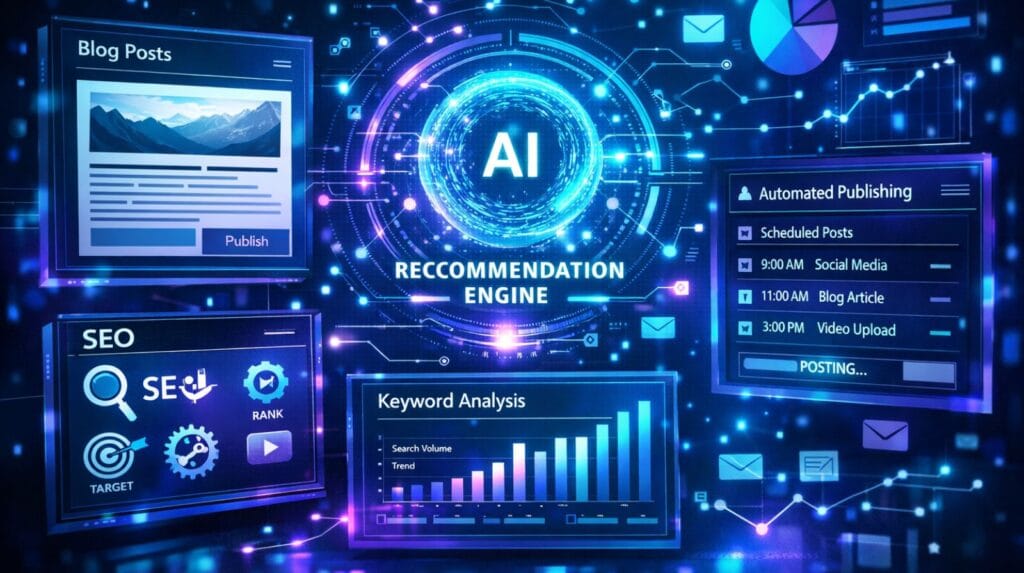
SEO automation tools handle technical optimizations, monitor keyword rankings, identify content gaps, and generate performance reports—allowing your team to focus on creating exceptional content rather than getting lost in data analysis.
Customer Journey Mapping and Orchestration
The most sophisticated marketing automation strategies don’t operate in silos but orchestrate seamless experiences across the entire customer journey. Start by mapping out the typical path from awareness to purchase and beyond, identifying key touchpoints, pain points, and decision moments.
For each stage, design automated workflows that provide appropriate content and engagement. An awareness-stage prospect might receive educational blog posts and industry reports. As they progress to consideration, automation introduces case studies and product comparisons. At the decision stage, they receive demos, free trials, or consultations with sales representatives.
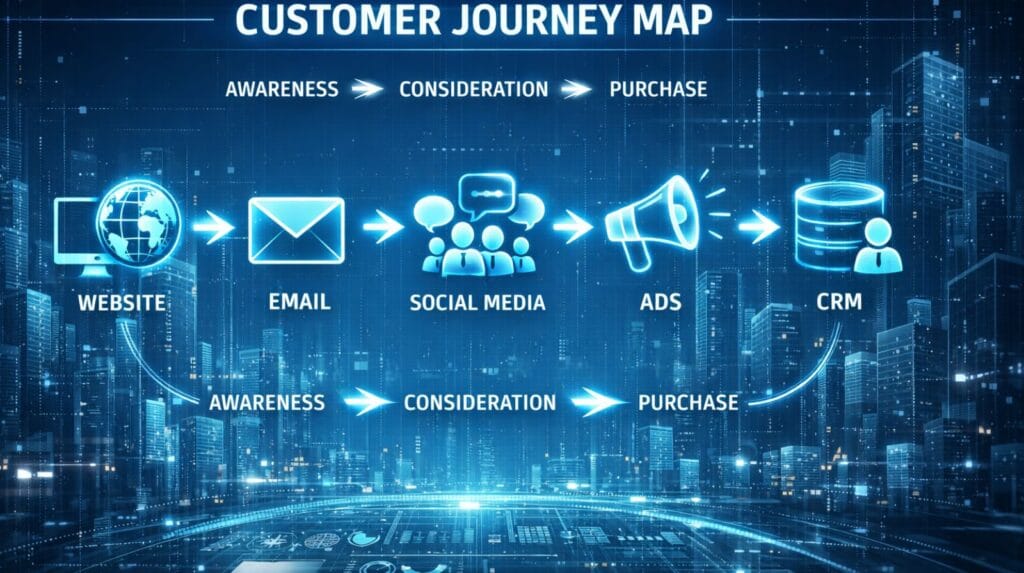
Cross-channel orchestration ensures consistent messaging whether prospects engage via email, social media, website visits, or paid advertising. Modern automation platforms can suppress email communications to prospects actively engaging with your website, preventing redundant messaging that damages user experience.
Advanced Automation Strategies for Competitive Advantage
As your automation maturity grows, explore advanced strategies that leverage artificial intelligence and machine learning. Predictive lead scoring uses historical data to identify patterns that indicate high purchase probability, often surfacing opportunities human analysis might miss.
AI-powered send-time optimization analyzes individual engagement patterns to determine the ideal moment to deliver messages to each recipient, significantly improving open and click-through rates. Predictive content recommendations suggest the next best content piece for each user based on their behavior and similar users’ paths, creating personalized journeys at scale.
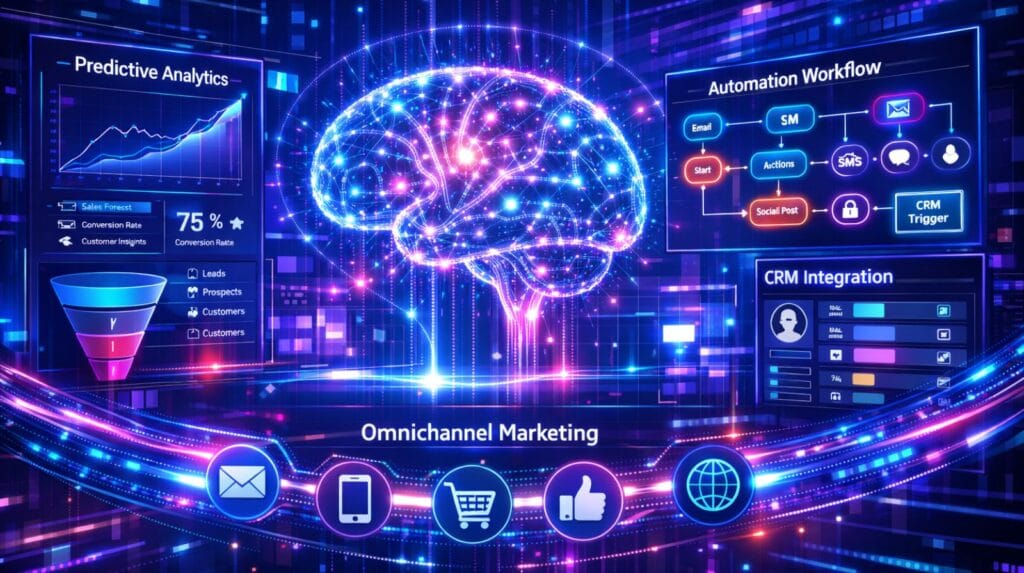
Integration depth separates good automation from great automation. Bidirectional sync between your marketing automation platform, CRM, e-commerce system, customer service tools, and analytics platforms creates a unified view of each customer relationship, enabling sophisticated segmentation and truly personalized experiences.
Best Practices for Sustainable Automation Success
Even the most sophisticated automation requires ongoing optimization and human oversight. Maintain the human touch by ensuring automated messages sound conversational and authentic—nothing alienates prospects faster than obviously robotic communication. Regular content reviews keep automated sequences fresh and relevant as your offerings and market conditions evolve.
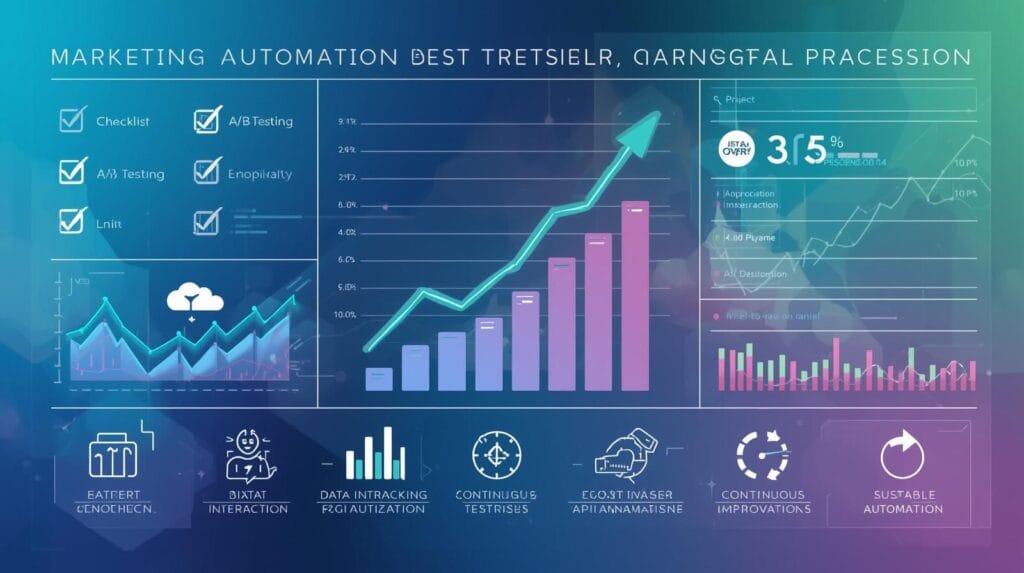
Implement rigorous testing protocols for all automated workflows before activation, and continuously A/B test email subject lines, content variations, send times, and calls-to-action. Small improvements compound dramatically when applied to automated campaigns touching thousands of contacts.
Data privacy and compliance considerations are non-negotiable in the automation era. Ensure your strategies comply with GDPR, CCPA, and other relevant regulations. Implement proper consent management, honor unsubscribe requests immediately, and maintain transparent data practices that build rather than erode trust.
Common Automation Pitfalls to Avoid
Over-automation represents one of the most frequent mistakes. Bombarding contacts with excessive messages, automating interactions that require genuine human touch, or creating overly complex workflows that confuse rather than guide prospects all undermine your efforts. Start simple, measure results, and scale strategically.

Neglecting data hygiene degrades automation effectiveness over time. Regularly clean your database of invalid email addresses, outdated information, and duplicate records. Poor data quality means your sophisticated segmentation and personalization strategies operate on flawed foundations.
Finally, remember that automation serves strategy, not the reverse. Technology should enable your marketing vision, not dictate it. The most successful automation strategies start with clear goals, deep customer understanding, and thoughtful journey mapping—then apply technology to execute that vision at scale.
Conclusion
Marketing automation strategies represent a powerful lever for business growth when implemented thoughtfully. By combining email marketing automation, intelligent lead scoring, social media orchestration, personalized content delivery, and seamless customer journey management, you create marketing experiences that feel personal and timely despite operating at tremendous scale.
The key lies in viewing automation not as a replacement for human creativity and strategic thinking but as an amplifier that frees your team to focus on what humans do best—understanding customers, crafting compelling stories, and building authentic relationships. Start with foundational automations that address your most pressing challenges, measure results rigorously, and expand strategically as you build expertise and demonstrate ROI.
In an increasingly competitive digital landscape, the question isn’t whether to embrace marketing automation but how quickly you can implement strategies that transform your marketing from a cost center into a predictable, scalable growth engine.
Marketing Automation FAQ
Marketing automation is the use of software and technology to automate repetitive marketing tasks, deliver personalized messages, and track campaign performance across multiple channels. It helps businesses scale operations while maintaining relevant and timely customer engagement.
Marketing automation saves time, increases efficiency, and improves lead conversion. Companies using automation can generate more sales-ready leads at lower costs, improve customer experience, and gain measurable insights across campaigns.
Key strategies include:
Email automation with segmentation, personalization, and drip campaigns
Lead scoring and progressive profiling to prioritize high-value prospects
Social media automation for consistent posting and engagement
Content marketing automation for personalized recommendations and multi-channel distribution
Customer journey orchestration across all touchpoints
Lead scoring assigns points to prospects based on demographic and behavioral data. For example, website visits, content downloads, and email engagement indicate a prospect's readiness to buy, helping sales teams focus on the most qualified leads.
Yes. Automated emails like behavior-triggered messages, welcome series, and abandoned cart reminders consistently achieve 2–3x higher open rates and better conversions compared to traditional batch campaigns.
Absolutely. Small businesses can start with basic email workflows, social scheduling, and lead nurturing sequences, then scale to advanced AI-driven personalization as their marketing grows.
Over-automation that overwhelms or alienates prospects
Neglecting data hygiene and outdated contact information
Using automation without a clear strategy or customer journey mapping
AI can optimize send times, predict high-value leads, suggest personalized content, and analyze multi-channel interactions to improve engagement and conversion rates at scale.