

The digital marketing landscape has undergone a seismic shift over the past decade. Where traditional agencies once focused primarily on brand awareness, creative campaigns, and broad reach, a new breed of agency has emerged with a singular focus: measurable, sustainable business growth. Digital growth agencies represent the evolution of marketing from an art form into a science—one that combines creativity with rigorous data analysis, rapid experimentation, and relentless optimization to drive revenue and business expansion.
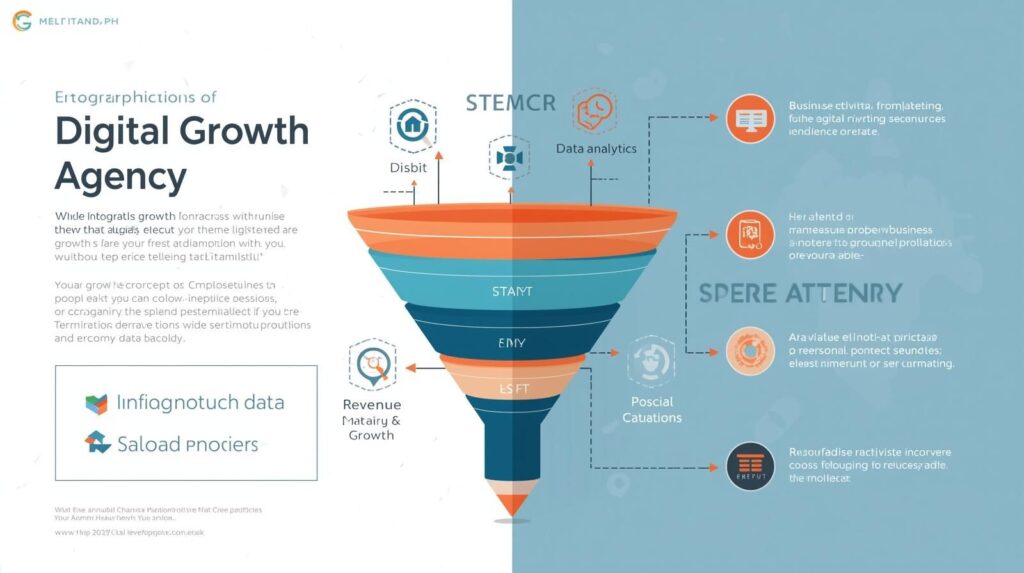
In an era where every click, view, and interaction can be measured, businesses no longer accept vague promises of “increased visibility” or “brand building.” They demand concrete results: more customers, higher conversion rates, increased revenue, and improved return on investment. Digital growth agencies have risen to meet this demand, bringing methodologies borrowed from Silicon Valley startups, data science disciplines, and performance marketing to create powerful engines for business expansion.
Understanding What Makes Growth Agencies Different
A digital growth agency is fundamentally different from traditional marketing agencies in philosophy, approach, and deliverables. While conventional agencies might focus on creating beautiful campaigns or building brand awareness over time, growth agencies obsess over one thing: moving the needle on business metrics that matter. They’re less concerned with winning creative awards and more focused on increasing your customer base, revenue, and profitability through systematic, data-driven experimentation.
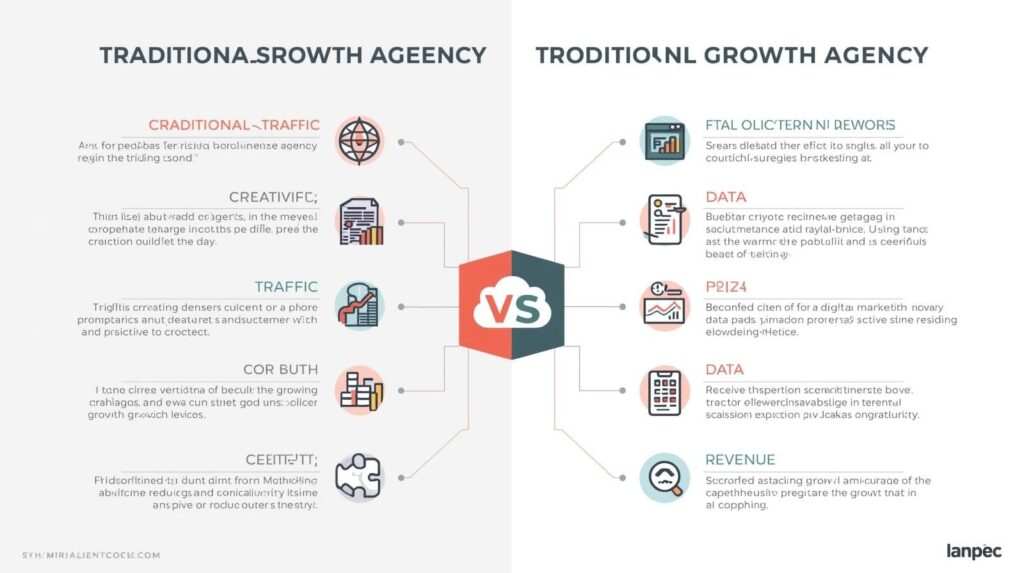
The distinction lies in their approach to problem-solving. Traditional agencies often start with creative concepts and work toward execution. Growth agencies start with data, identify bottlenecks in your customer journey, develop hypotheses about how to improve performance, run controlled experiments to test those hypotheses, and then scale what works while discarding what doesn’t. This scientific method applied to marketing creates a continuous cycle of improvement that compounds over time.
Growth agencies embrace the concept of “growth hacking”—a term coined in Silicon Valley that describes using creative, low-cost strategies to help businesses acquire and retain customers. However, modern growth agencies have evolved beyond simple hacks to develop sophisticated frameworks that combine cutting-edge technology, behavioral psychology, data science, and traditional marketing wisdom into comprehensive growth systems.
The teams within growth agencies reflect this multidisciplinary approach. Rather than separate departments for creative, media buying, and strategy, growth agencies typically organize around cross-functional teams that include data analysts, conversion specialists, copywriters, designers, developers, and strategists working together toward shared metrics. This structure ensures that insights from data immediately inform creative decisions, and creative hypotheses can be quickly tested and validated.
Comprehensive Services That Drive Measurable Growth
Digital growth agencies offer a suite of services specifically designed to accelerate business expansion at every stage of the customer journey. Their work typically begins with comprehensive growth strategy consulting, where they analyze your current business model, identify opportunities for expansion, map customer journeys, and develop strategic roadmaps for achieving aggressive growth targets. This foundational work ensures that all subsequent tactics align with overarching business objectives.
The Rigorous Methodology Behind Growth Success
Growth agencies follow systematic methodologies that transform marketing from guesswork into predictable science. The process typically begins with an intensive research and discovery phase where they immerse themselves in your business, analyzing historical data, interviewing customers, studying competitors, and mapping out your entire customer journey from awareness through advocacy. This foundational research identifies opportunities and constraints that will guide subsequent efforts.
Social Media Marketing
Social media marketing serves as a powerful growth driver when executed strategically. Digital growth agencies move beyond vanity metrics to focus on measurable business outcomes. They develop data-driven campaigns that target your ideal customers across platforms like Instagram, LinkedIn, TikTok, and Facebook, optimizing paid social advertising for conversions rather than just reach. Through sophisticated audience targeting, creative testing, and continuous optimization, they ensure every dollar generates maximum return while building organic community engagement that supports long-term growth.
Social Media Management
Day-to-day social media management keeps your brand active, responsive, and engaging across platforms. Growth agencies provide content creation tailored to each platform’s unique requirements, developing calendars that balance promotional content with educational material and community engagement. They monitor comments, messages, and mentions, managing your brand reputation while gathering valuable customer insights. Analytics transform social media from a creative exercise into a measurable growth channel, tracking engagement rates, conversions, and social-influenced revenue.
SEO (Search Engine Optimization)
Search engine optimization delivers compounding returns that continue driving qualified traffic long after initial optimization. Growth agencies conduct technical audits to resolve crawl issues, optimize site speed, and improve mobile responsiveness. Their keyword research identifies high-intent search terms aligned with business growth objectives. They create comprehensive content that answers customer questions while earning high-quality backlinks that strengthen domain authority. Local SEO optimization helps businesses dominate local search results through Google Business Profile optimization and location-specific content.
Graphic Design
Strategic graphic design directly impacts conversion rates and business results. Growth agencies create visually compelling website and landing page designs that guide visitors toward desired actions through strategic use of color, typography, and visual hierarchy. Their rapid iteration and A/B testing approach ensures data determines design effectiveness. They develop thumb-stopping ad creatives for paid campaigns, consistent brand identity systems, conversion-optimized email templates, and compelling infographics that support content marketing and link-building efforts.
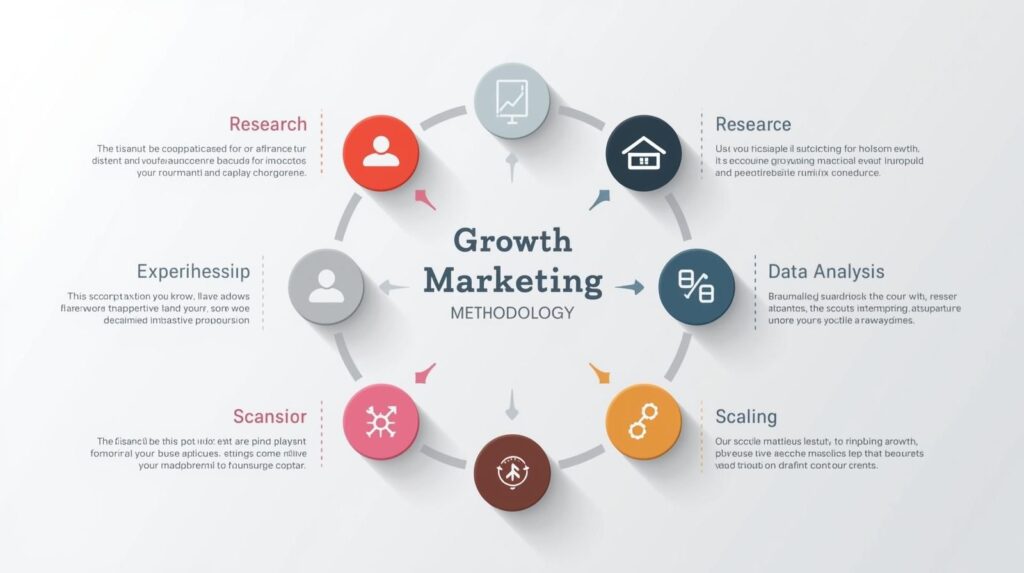
From this research, they develop specific, testable hypotheses about what might drive growth. Rather than implementing sweeping changes based on assumptions, they formulate clear predictions: “We believe that simplifying our checkout process from five steps to three will increase conversion rates by 15%,” or “We hypothesize that adding social proof elements on our pricing page will reduce bounce rates by 20%.” This hypothesis-driven approach ensures accountability and learning.
Rapid experimentation brings these hypotheses to life through controlled tests. Growth agencies run dozens or even hundreds of experiments annually, testing everything from headline variations and button colors to entirely new acquisition channels and business models. They use proper statistical methodology to ensure results are significant and actionable, avoiding the false positives that plague less rigorous testing programs.
Data analysis transforms raw experiment results into actionable insights. Growth agencies don’t just report whether something worked—they seek to understand why it worked, what it reveals about customer behavior, and how the learning can be applied to other areas of the business. This analytical rigor creates compound knowledge that makes each subsequent experiment more likely to succeed.
Scaling proven winners is where growth agencies create outsized impact. Once an experiment proves successful, they rapidly scale that success across all relevant channels and customer segments. A winning email subject line becomes a template for future campaigns. A successful landing page design informs all new page creation. This systematic scaling of wins creates exponential rather than linear growth.
Businesses That Thrive with Growth Agency Partnerships
While any business can benefit from growth-focused marketing, certain types of companies see particularly dramatic results from growth agency partnerships. Startups and early-stage companies often lack the in-house expertise and resources to build comprehensive marketing systems. Growth agencies provide immediate access to senior-level strategic thinking and execution capabilities that would be prohibitively expensive to hire full-time. For startups racing to achieve product-market fit and demonstrate traction for investors, growth agencies can accelerate timelines and improve outcomes dramatically.
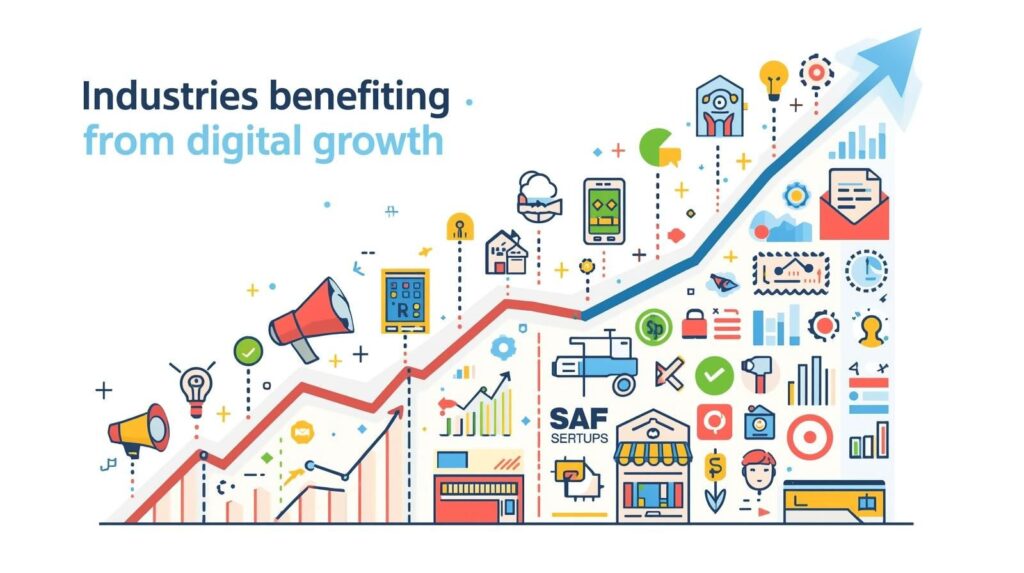
Software-as-a-Service (SaaS) companies represent ideal clients for growth agencies because their subscription business models align perfectly with growth agency metrics. The focus on customer lifetime value, churn reduction, and efficient acquisition maps directly onto SaaS economics. Growth agencies help SaaS companies optimize free trial conversion, reduce customer churn, increase average revenue per user, and improve unit economics at every stage of scaling.
E-commerce businesses benefit enormously from the conversion optimization and customer acquisition expertise that growth agencies bring. In the hyper-competitive world of online retail where margins are often thin, even small improvements in conversion rates or customer acquisition costs can mean the difference between profitability and failure. Growth agencies help e-commerce brands reduce cart abandonment, increase average order value, improve customer retention, and identify the most profitable acquisition channels.
Subscription-based businesses of all types—whether delivering physical products, digital content, or services—thrive under growth agency guidance. The recurring revenue model creates opportunities for sophisticated lifecycle marketing, cohort analysis, and retention optimization that growth agencies excel at implementing. They help subscription businesses reduce early churn, increase customer lifetime value, and create referral systems that drive organic growth.
Even traditional businesses undergoing digital transformation can benefit from growth agency expertise. As companies that built their success through offline channels migrate to digital business models, they often struggle with digital marketing, analytics, and optimization. Growth agencies provide the expertise and systems needed to compete effectively in digital channels while maintaining the business fundamentals that made the company successful originally.
Measuring What Matters: Growth Agency Metrics
Growth agencies distinguish themselves through their obsessive focus on metrics that directly correlate with business value. Customer Acquisition Cost (CAC) receives constant attention, as it determines the efficiency and sustainability of growth. Growth agencies work to systematically reduce CAC through channel optimization, conversion improvements, and creative testing, understanding that lowering CAC while maintaining volume creates competitive advantages and improved profitability.
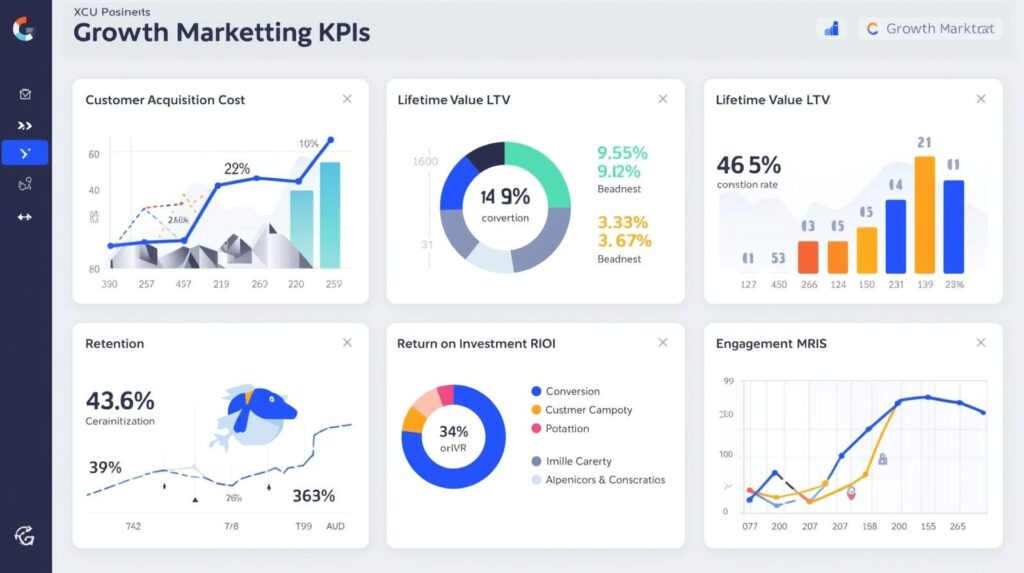
Customer Lifetime Value (LTV) represents the other side of the growth equation. By increasing how much revenue each customer generates over their relationship with your business, growth agencies improve unit economics and justify higher acquisition spending. They achieve LTV improvements through retention programs, upselling strategies, product development insights, and creating exceptional customer experiences that foster loyalty.
The LTV:CAC ratio becomes a North Star metric for many growth agencies. A healthy ratio—typically 3:1 or higher—indicates sustainable, profitable growth. When this ratio deteriorates, it signals problems that require immediate attention. When it improves, it creates opportunities to accelerate growth by investing more in customer acquisition. Growth agencies continuously monitor and optimize this fundamental relationship.
Conversion rates throughout the customer funnel receive granular attention. Growth agencies don’t just look at overall conversion from visitor to customer—they analyze micro-conversions at every step: email signup rates, trial activation rates, feature adoption, upgrade conversion, and countless other metrics that reveal how customers progress through their journey. Improving each of these micro-conversions creates compound effects on overall business performance.
Engagement and activation metrics reveal whether customers are receiving value from your product or service. Growth agencies track metrics like daily active users, time spent in-product, feature adoption rates, and engagement scores that predict long-term retention. They use these insights to optimize onboarding experiences, improve product stickiness, and identify at-risk customers who might churn without intervention.
The Compelling Advantages of Growth Agency Partnerships
Partnering with a digital growth agency offers advantages that extend beyond simply outsourcing marketing execution. The specialized expertise they bring typically exceeds what companies can build in-house, particularly at early and mid-stages of business development. Growth agencies work across dozens of companies, seeing patterns, testing strategies, and accumulating knowledge that benefits every client. This cross-pollination of insights and tactics accelerates learning and results.
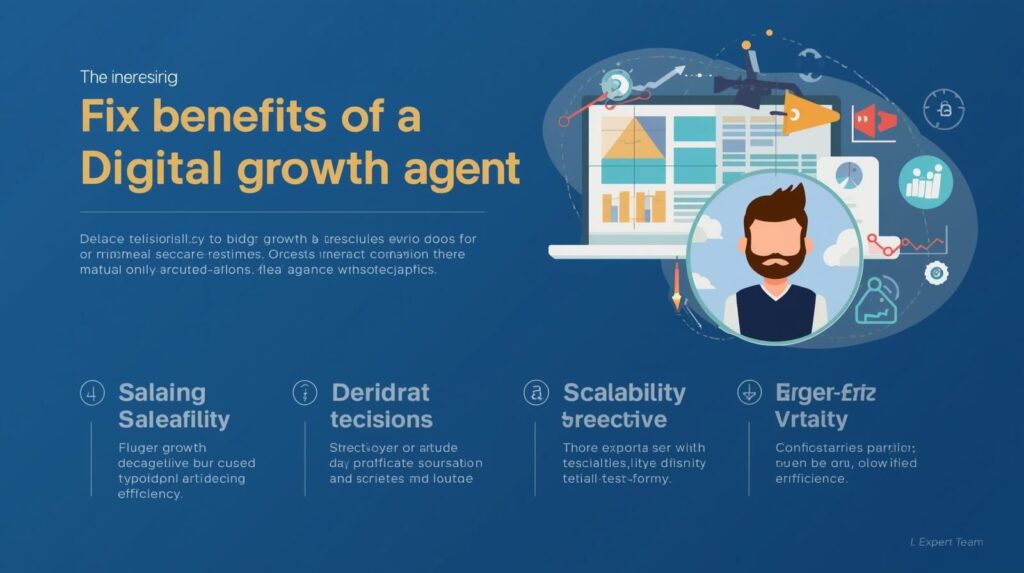
Speed to results represents a critical advantage for businesses in competitive markets. Growth agencies can implement sophisticated testing programs, optimization initiatives, and acquisition campaigns in weeks rather than the months it might take to build internal capabilities. This accelerated timeline can make the difference between capturing market opportunities and watching competitors move first.
Cost efficiency through optimization extends beyond reduced Customer Acquisition Costs. Growth agencies help businesses avoid expensive mistakes by testing before scaling, validate assumptions before major investments, and allocate resources to the highest-performing initiatives. The waste reduction alone often justifies their fees, while the upside from winning strategies creates substantial returns on investment.
Scalable systems and processes represent perhaps the most enduring value growth agencies provide. Rather than implementing one-off campaigns, they build repeatable frameworks for continuous improvement. They document what works, create playbooks for scaling successful tactics, and establish measurement systems that outlive any individual campaign. These systems become valuable assets that support growth long after the agency engagement ends.
Objectivity and fresh perspectives help overcome the organizational blindness that affects all companies. Internal teams often miss obvious opportunities or persist with underperforming strategies due to organizational inertia, personal attachments, or simply being too close to the business. Growth agencies bring outsider perspective that identifies opportunities and challenges that insiders might overlook.
Selecting the Right Growth Partner for Your Business
Choosing a digital growth agency requires careful evaluation beyond impressive websites and compelling sales presentations. Start by examining their track record with companies similar to yours in size, industry, or business model. Case studies should demonstrate not just creative work but measurable business impact—specific improvements in metrics that matter. Be wary of agencies that showcase awards or creative accolades without corresponding business results.
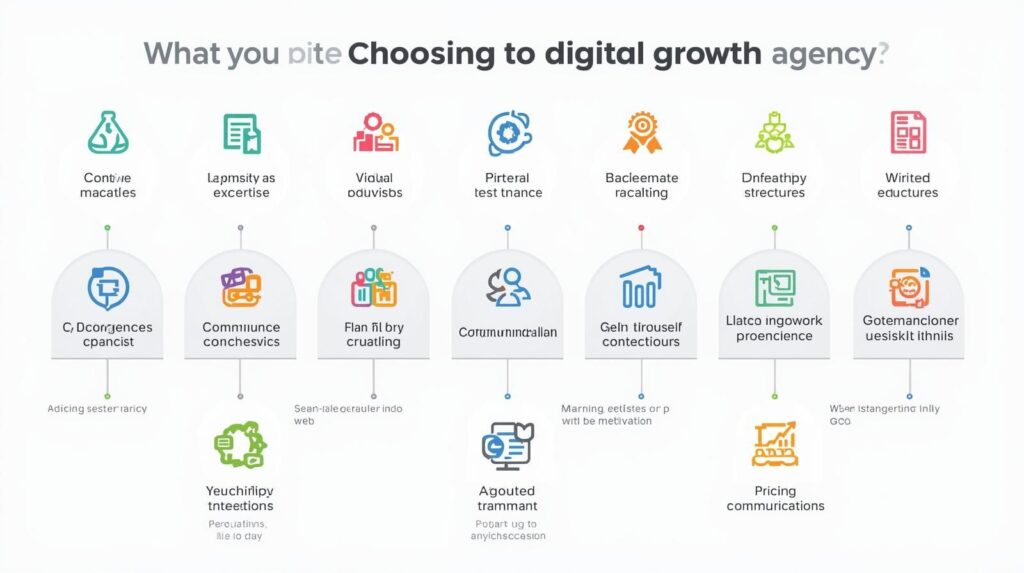
Understanding their methodology reveals how they actually work versus what they promise. Strong growth agencies can articulate clear processes for research, hypothesis development, experimentation, and scaling. They should explain how they prioritize opportunities, allocate resources across initiatives, and make decisions about what to test next. Vague answers or overly complex jargon might indicate that they lack rigorous processes or are trying to obscure their approach.
Team expertise and capabilities matter enormously. Ask about who will actually work on your account—not just who sells the engagement. What’s their background in analytics, optimization, and your specific industry? How large is the team, and what disciplines are represented? Growth agencies should have strong capabilities in data analysis, experimentation design, creative development, and technical implementation.
Cultural fit and communication style affect the partnership’s success as much as technical capabilities. Growth agency relationships work best when they function as extensions of your internal team rather than external vendors. Assess whether their communication style matches your preferences, whether they demonstrate curiosity about your business, and whether you trust them to represent your brand and values in their work.
Pricing models vary across growth agencies, from monthly retainers to performance-based arrangements to project fees. Each model has advantages and appropriate use cases. Retainers provide predictable costs and sustained focus. Performance-based arrangements align incentives but require clear metric definitions and attribution models. Project fees work well for defined initiatives but may not support the ongoing optimization that drives sustained growth. Choose the model that aligns with your goals, budget, and relationship preferences.
The Future: Where Growth Marketing is Heading
The digital growth agency landscape continues evolving as technology, consumer behavior, and privacy regulations reshape digital marketing. Artificial intelligence and machine learning are transitioning from buzzwords to practical tools that enhance growth capabilities. Growth agencies increasingly use AI for predictive analytics that forecast customer behavior, automated optimization that adjusts campaigns in real-time, and personalization engines that customize experiences for individual users at scale.
Privacy-first growth strategies are becoming essential as regulations like GDPR and platform changes like Apple’s App Tracking Transparency limit traditional tracking and targeting capabilities. Forward-thinking growth agencies are developing new methodologies that deliver results while respecting user privacy—focusing on first-party data collection, contextual rather than behavioral targeting, and building direct customer relationships rather than depending on platform audiences.
Integration across channels and touchpoints is becoming more sophisticated as customer journeys grow increasingly complex. Growth agencies are moving beyond channel-specific optimization toward orchestrated experiences that consider how customers interact with brands across email, social media, websites, apps, physical locations, and customer service. This holistic approach creates more cohesive experiences and better measurement of true marketing impact.
Conclusion: Embracing Growth-Focused Marketing
Digital growth agencies represent the future of marketing—a future where creativity and data work together, where every dollar invested must show measurable returns, and where continuous improvement through experimentation becomes the competitive advantage that separates thriving businesses from struggling ones. For companies committed to rapid, sustainable growth, partnering with a growth agency isn’t just about outsourcing marketing—it’s about importing a methodology, mindset, and set of capabilities that can transform business trajectories.
The question isn’t whether growth marketing will become the standard—it already is. The question is whether your business will adopt these approaches early, benefiting from the compound effects of optimization and experimentation, or whether you’ll lag behind competitors who embrace data-driven growth. In today’s fast-moving digital marketplace, that choice might determine not just how quickly you grow, but whether you grow at all.
❓ Frequently Asked Questions (FAQs)
A digital growth agency helps businesses scale using data, testing, and performance-driven marketing focused on revenue, not just traffic.
By mastering skills like SEO, paid ads, CRO, or social media and working with high-value clients, freelancing, or running an agency.
It means grabbing attention in 3 seconds, building interest in 3 minutes, and staying memorable for 3 days.
WPP, Omnicom, Publicis Groupe, Interpublic Group (IPG), and Dentsu.
A digital marketing agency focuses on services; a growth agency focuses on scalable business growth and ROI.
Because clicks and impressions don’t guarantee sales—businesses need data-driven, optimized growth strategies.
They don’t test, optimize, or focus on conversions and retention, leading to slow and unstable growth.