
The business landscape has undergone a seismic shift over the past two decades. Where billboards, television commercials, and print advertisements once dominated marketing budgets, digital channels now reign supreme. This transformation isn’t merely a trend but a fundamental restructuring of how businesses connect with their audiences. Digital marketing has emerged as the cornerstone of successful business strategies, offering advantages that traditional marketing simply cannot match.
The Cost-Effectiveness Revolution
One of the most compelling benefits of digital marketing is its remarkable cost-effectiveness. Traditional marketing campaigns often require substantial upfront investments: printing costs for brochures, premium rates for prime-time television spots, or significant fees for billboard placements in high-traffic areas. These expenses can quickly drain budgets, particularly for small and medium-sized enterprises.
Digital marketing democratizes the advertising landscape. A startup operating from a garage can potentially reach millions of people through strategic social media campaigns, search engine optimization, or targeted email marketing, often at a fraction of the cost of a single newspaper advertisement. Pay-per-click advertising allows businesses to set their own budgets and only pay when someone actively engages with their content. Email marketing boasts one of the highest returns on investment of any marketing channel, with studies consistently showing returns of $40 or more for every dollar spent.
This accessibility means that businesses no longer need massive marketing budgets to compete effectively. A compelling message, creative content, and smart targeting can often outperform expensive traditional campaigns, allowing even the smallest businesses to carve out their market share.
Precision Targeting That Transforms Marketing
Digital marketing offers unprecedented targeting capabilities that would have seemed like science fiction just a generation ago. Rather than casting a wide net and hoping to catch a few interested customers, businesses can now identify and reach their ideal audience with laser precision.

Consider the sophistication of modern advertising platforms. Businesses can target potential customers based on age, location, interests, online behavior, purchase history, device usage, and countless other parameters. A yoga studio can specifically reach health-conscious women aged 25-45 within a five-mile radius who have shown interest in wellness content. An e-commerce store selling vintage video games can target gaming enthusiasts who have recently browsed retro gaming websites.
This precision extends beyond initial targeting to personalization. Digital marketing enables businesses to create customized experiences for different audience segments. Website visitors can see different content based on their previous interactions, email subscribers receive recommendations based on their purchase history, and advertisement creative can be automatically adjusted to resonate with different demographic groups. This level of personalization creates more relevant, engaging experiences that drive significantly higher conversion rates than generic, one-size-fits-all messaging.
The Power of Measurable Results
Perhaps nothing distinguishes digital marketing more dramatically from traditional approaches than its measurability. Traditional marketing often operates in a fog of uncertainty. How many people actually saw your billboard? How many newspaper readers paid attention to your advertisement? These questions typically remain unanswered, forcing marketers to rely on broad estimates and educated guesses.
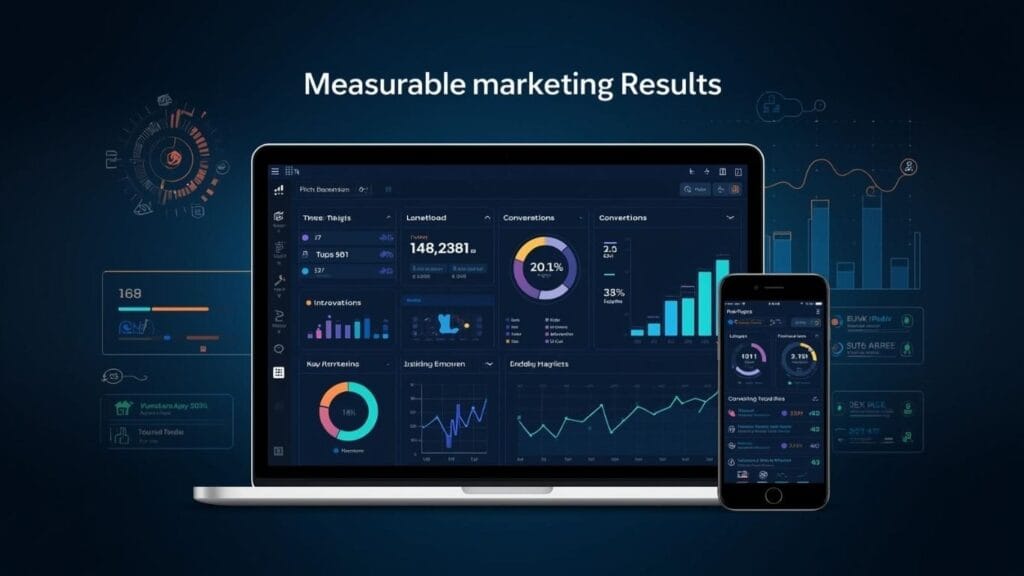
Digital marketing illuminates every aspect of campaign performance. Analytics platforms provide detailed insights into how many people saw your content, how many clicked, how long they stayed engaged, which channels drove the most valuable traffic, and ultimately, which efforts generated sales. This transparency transforms marketing from an art form based largely on intuition into a science grounded in data.
Real-time tracking means businesses can monitor campaign performance as it happens, identifying successful elements worth scaling and problematic aspects requiring immediate adjustment. Return on investment becomes precisely calculable rather than broadly estimated. Marketing teams can definitively demonstrate their value to stakeholders, justify budget allocations with concrete data, and continuously refine their strategies based on what the numbers reveal.
Breaking Geographical Boundaries
Digital marketing dissolves geographical constraints that once limited business growth. A local boutique can attract customers from across the country or around the world. A specialized service provider can find clients in markets they could never efficiently reach through traditional advertising. The internet operates 24 hours a day, seven days a week, meaning your marketing works continuously, connecting with potential customers across different time zones without requiring any additional effort.

Simultaneously, digital marketing enables remarkable local precision. Local SEO strategies help businesses appear prominently when nearby customers search for relevant products or services. Geo-targeting in advertising ensures that location-specific promotions reach the right audience. A restaurant can target advertisements exclusively to people within a short drive, while an international software company can create customized campaigns for different regional markets, addressing local preferences, languages, and cultural nuances.
This combination of global reach and local precision creates opportunities that were simply impossible in the pre-digital era, allowing businesses to think globally while acting locally in ways that maximize both reach and relevance.
Building Meaningful Customer Relationships
Digital marketing transforms the relationship between businesses and customers from a one-way broadcast into an ongoing conversation. Social media platforms, comment sections, email interactions, and messaging apps create multiple touchpoints for engagement. Customers can ask questions, share feedback, express concerns, and participate in brand communities, while businesses can respond promptly, demonstrate their values, and build genuine relationships.
This engagement strengthens customer loyalty and turns satisfied customers into brand advocates. When businesses consistently provide value through helpful content, responsive customer service, and engaging social presence, they create emotional connections that transcend transactional relationships. These connections drive repeat business, positive word-of-mouth recommendations, and the kind of passionate customer base that becomes a powerful marketing force in itself.
User-generated content further amplifies this benefit. Customers sharing their experiences, posting reviews, creating content featuring products, and recommending businesses to their networks provide authentic, credible marketing that companies could never create themselves. Digital platforms make encouraging, curating, and amplifying this user-generated content straightforward and effective.
Flexibility to Adapt and Optimize
Markets change rapidly, and digital marketing provides the flexibility to adapt at similar speed. Traditional campaigns, once launched, typically run their course regardless of performance. A printed magazine advertisement will appear in every copy whether it’s generating results or not. Digital campaigns can be paused, adjusted, or completely reimagined within minutes based on performance data or changing circumstances.
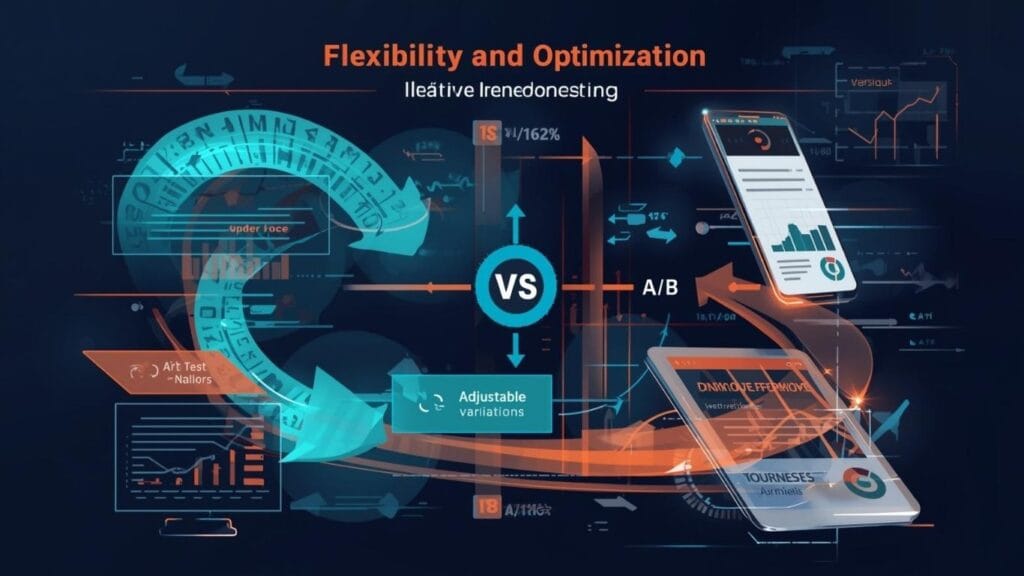
A/B testing capabilities allow marketers to experiment with different approaches, comparing headlines, images, calls-to-action, and other elements to identify what resonates most effectively with their audience. Rather than relying on assumptions, businesses can test hypotheses and let actual user behavior guide strategic decisions. This iterative approach to optimization continuously improves campaign performance, extracting maximum value from marketing investments.
When external circumstances shift, digital marketing flexibility becomes invaluable. Economic changes, competitive moves, seasonal fluctuations, or unexpected events can all be addressed quickly through campaign adjustments that would be impossible with traditional media’s longer lead times and fixed commitments.
Establishing Authority and Building Brands
Digital marketing provides exceptional opportunities for businesses to establish themselves as industry authorities. Content marketing, through blogs, videos, podcasts, webinars, and social media, allows businesses to share expertise, educate audiences, and demonstrate thought leadership. When companies consistently provide valuable, insightful content, they build trust and position themselves as the go-to resource in their field.
This authority-building creates competitive advantages that extend far beyond immediate sales. Potential customers who have consumed helpful content from a business are far more likely to choose that company when they’re ready to make a purchase. The relationship begins with value provision rather than sales pressure, creating a foundation of trust that traditional advertising struggles to achieve.
Social proof further enhances brand building in digital environments. Online reviews, testimonials, case studies, and ratings provide the credibility that potential customers seek. Digital platforms make gathering and showcasing this social proof straightforward, while giving businesses opportunities to respond to feedback and demonstrate their commitment to customer satisfaction.
The Path Forward
Digital marketing has evolved from an optional supplement to traditional marketing into an essential component of business success. Its benefits span cost-effectiveness, precise targeting, measurable results, global reach, customer engagement, flexibility, and brand building. These advantages aren’t merely incremental improvements but fundamental transformations in how businesses connect with their audiences.

For businesses not yet fully embracing digital marketing, the opportunity for growth is substantial. For those already invested in digital strategies, continuous optimization and exploration of emerging channels promise ongoing advantages. The digital marketing landscape will continue evolving, but its central position in business strategy is firmly established. The question isn’t whether to invest in digital marketing, but how to maximize its considerable potential for your specific business goals.
Frequently Ask Question
The four main benefits of e-marketing are:
Cost-effectiveness – Lower costs compared to traditional advertising.
Global reach – Businesses can reach audiences worldwide instantly.
Targeted marketing – Ads can be shown to specific audiences based on interests and behavior.
Measurable results – Campaign performance can be tracked in real time using analytics.
The ten key benefits of marketing include:
Increased brand awareness
Better customer engagement
Higher sales and revenue
Stronger customer trust
Market expansion
Competitive advantage
Improved customer retention
Data-driven decision making
Business growth
Long-term brand value
Digital marketing is important because it:
Helps businesses reach online audiences
Improves brand visibility and recognition
Generates quality leads and conversions
Allows real-time performance tracking
Supports business scalability and growth
The five major benefits of marketing are:
Creates brand awareness
Attracts new customers
Builds customer relationships
Increases sales opportunities
Strengthens brand reputation
Digital marketing is better because it is more affordable, highly targeted, measurable, and flexible. Businesses can optimize campaigns instantly and reach the right audience at the right time.
Digital marketing helps small businesses compete with larger brands by offering low-cost advertising, local targeting, social media exposure, and measurable results without large budgets.
Long-term benefits include sustainable traffic growth, strong brand authority, loyal customers, consistent lead generation, and higher return on investment over time.